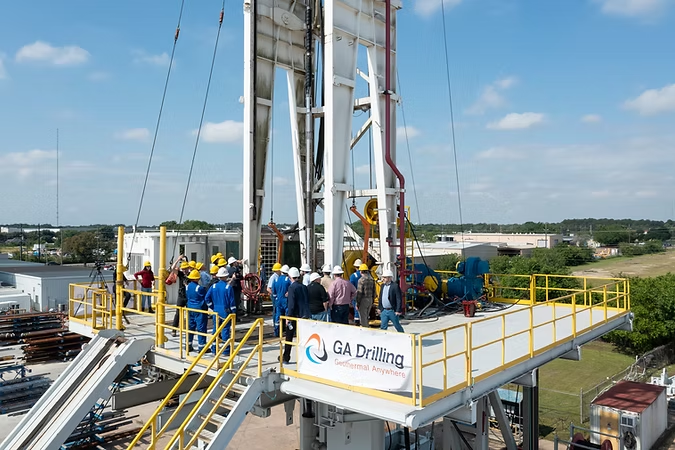
The explosive growth of solar, wind, and electric vehicles over the last decade has made waves. Quietly, geothermal has likewise made significant developments and is well poised to increase its share of the energy matrix. This can be done, in part, by the improvements made in the oil and gas industry, which will play a pivotal role in advancing the development of the geothermal industry. Innovations in the form of hydraulic fracturing and horizontal drilling will open up new locations for geothermal development. The ability to drill deeper and with higher efficiency can open up whole new areas to geothermal development, providing a reliable and continuous energy source across the globe.
One challenge behind geothermal is that it has been historically concentrated in a few countries with accessible resources, including Iceland, Indonesia, Kenya, Italy, and the United States. The limit for geothermal energy plants up to this point has been around 3,000 to 4,000 meters. However, new advances in the depths of geothermal drilling mean that areas of the world that were previously thought of as untenable for geothermal development could now reap the benefits. This leads to an exciting and under-discussed aspect of geothermal: it has been tested on a large scale. Geothermal energy has been around for decades, reducing the risk and negating the need to prove much of the technology.
Support authors and subscribe to content
This is premium stuff. Subscribe to read the entire article.