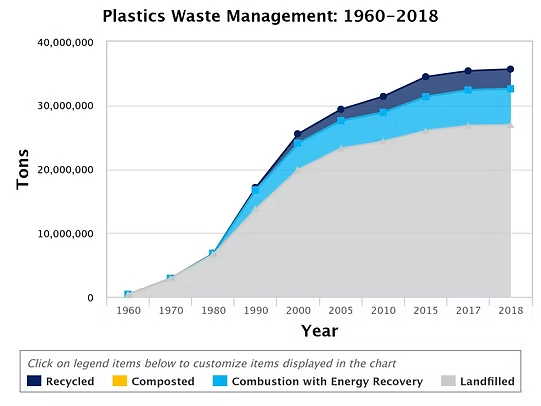
Plastic is great. Thanks to their durability, lightweight nature, and versatility, they keep our foods fresh via packaging, revolutionize healthcare through single-use plastics, and make our vehicles lighter and more fuel-efficient. To truly grasp their impact, one must examine the following statistic: plastic production grew from 2 million tonnes in 1950 to 348 million tonnes in 2017 and is still expected to double in capacity by 2040. However, despite their widespread use, plastics are notoriously difficult to recycle. A recent survey by The Recycling Partnership showcased that 80% of people believe that recycling their waste makes a difference; reality offers a striking difference, with only 9% of global plastic being recycled.
Plastics are made by linking chains of different molecules, creating diverse types of plastics with distinct qualities. Everything from home insulation to food packaging to cigarette filters contains various plastic types. To better classify them, the Society of Plastics introduced the Resin Identification Code system in 1988, dividing plastics into seven categories. Those higher on this scale, such as multi-layered plastics, are generally more difficult to recycle. Moreover, many products are made of multiple plastic types. Take a takeaway coffee cup: its outer layer is structured paper, the inner lining is polyethylene (type 2) for waterproofing, and the lid is often polystyrene (type 6). Since the layers are bonded, separating them for proper recycling is challenging. While this combination of materials is practical for use, it complicates the recycling process significantly.
Support authors and subscribe to content
This is premium stuff. Subscribe to read the entire article.