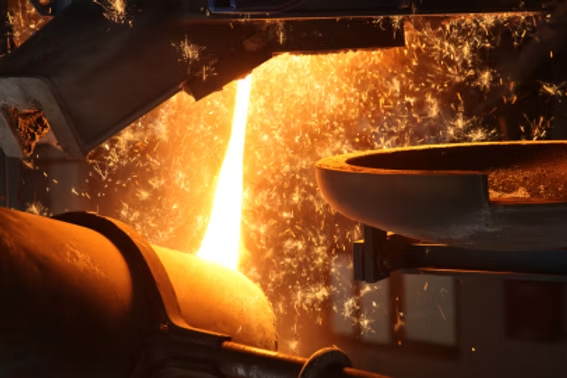
The steel industry provides an interesting case study of the ability of different technologies to work together to decarbonize energy-intensive sectors. As a generator of 7% of global industrial emissions, the decarbonization of steel is critical for achieving desired carbon reduction targets. A report from Deloitte on the pathways to the decarbonization of steel found that emissions in steel production will need to fall by 90% to meet targets set by the Paris Agreement. With the majority of green steel being produced using blast furnaces, carbon capture and hydrogen use will likely prove to be critical for reducing emissions in traditional steel production methods. At the same time, it is unfeasible to think that all steel plants can suddenly switch to green hydrogen, so reducing current energy losses and inefficiencies will be a necessary step to be taken immediately.
By providing the energy required for the production process, steel manufacturers can significantly reduce carbon usage. Whether the production is done through coke production, blast furnaces, or iron-to-raw steel, carbon emissions are dominated by the ironmaking and steelmaking process as well as finishing and distribution. Steel manufacturers have made positive moves to limit carbon emissions, including widespread reductions by 2030 and commitments to net zero by 2050. There are technologies that can be used to reduce coal usage without forcing the adoption of expensive green hydrogen technologies or carbon capture efforts. One of the promising technologies is gas-based, which may be adopted by certain European steelmakers for the next decade until the believe that green hydrogen can compete on the international market.
Support authors and subscribe to content
This is premium stuff. Subscribe to read the entire article.