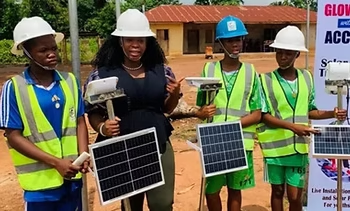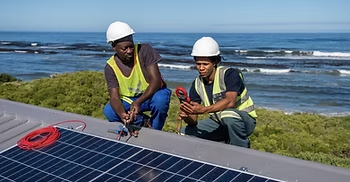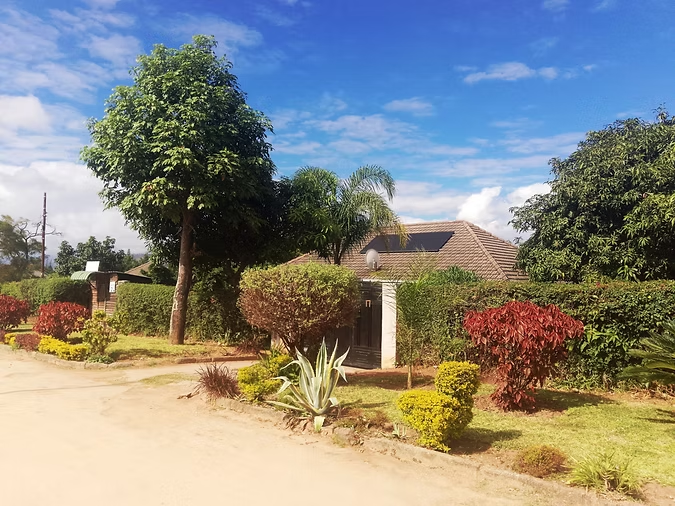
In downtown Mutare, eastern Zimbabwe, nearly every electrical shop is now well-stocked with solar equipment, ranging from solar panels to lithium batteries. Similar shops have appeared in various major cities across the country. Outside some of these electrical shops, shop assistants can be heard appealing to customers with their loud voices, punctuated by deafening music blaring from large speakers. They are selling everything solar, from panels to batteries, to solar water pumps and other solar accessories. They sell even household appliances that are compatible with solar systems. And their business is booming. Demand for solar equipment in Zimbabwe is roaring against the backdrop of a crippling and unending electricity crisis.
For decades, Zimbabwe has been largely dependent on hydroelectricity from the Kariba Dam, with up to 70 percent of the country’s electricity requirements met by the plant, and the remainder supplied by coal and other renewable energy sources. However, devastating droughts caused by climate change are making hydropower unreliable. At the moment, Zimbabwe is still smarting from a severe El Niño-induced drought—the worst in more than 40 years—which ravaged the Southern African countries, including Zambia, Malawi, Mozambique, and Namibia in 2024. At the height of the 2024 drought, the usable live storage water for power generation at Kariba Dam dropped to a paltry 2.41 percent. By December 2024, the Kariba Hydropower Station was generating only 124.5 MW per day, despite an installed capacity of 1,050 MW. Though electricity generation from Kariba Hydropower Station has increased to at least 400MW per day following a better rainfall season this year, Zimbabwe is still in the throes of an electricity crisis.
Support authors and subscribe to content
This is premium stuff. Subscribe to read the entire article.