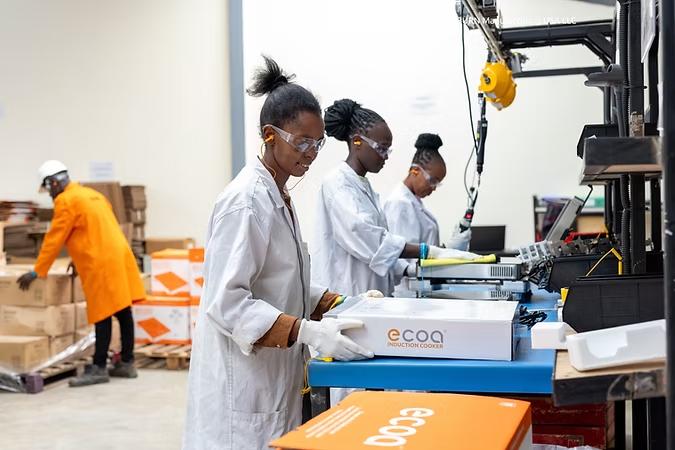
The opportunity to curb emissions, promote economic growth, and facilitate a more equitable transition to renewable energy is evident in the global expansion of clean cooking solutions. The scope of the problem is immense, over 2 billion people cook with either kerosene or smoky biomass, resulting in between 2 and 3 million premature deaths per year. The climate degradation caused by unclean cooking, which accounts for 2% of greenhouse gas emissions, has led to significant deforestation. Alongside its environmental concerns, the disproportionate impact on women and children of dirty fuels could be replaced by both health and economic benefits if switched to improved systems.
Chris McKinney, Chief Commercial Officer at Burn Manufacturing, a major Kenya-based clean cooking manufacturer, outlined the developments he has seen in the market during recent years. The most notable growth, as McKinney explains, has been in the electric cooking sector. He attributes this growth to the new cost-effectiveness of induction-based electric cooking. The cost-effectiveness is made possible through advancements in financing. These include selling carbon credits and a pay-as-you-go system that limits the upfront cost. The growth of Burn over the last several years has been significant. From one manufacturing facility in Kenya, Burn has spread across the continent to include a manufacturing plant in Nigeria, as well as assembly locations in Tanzania, Ghana, and Malawi.
Support authors and subscribe to content
This is premium stuff. Subscribe to read the entire article.