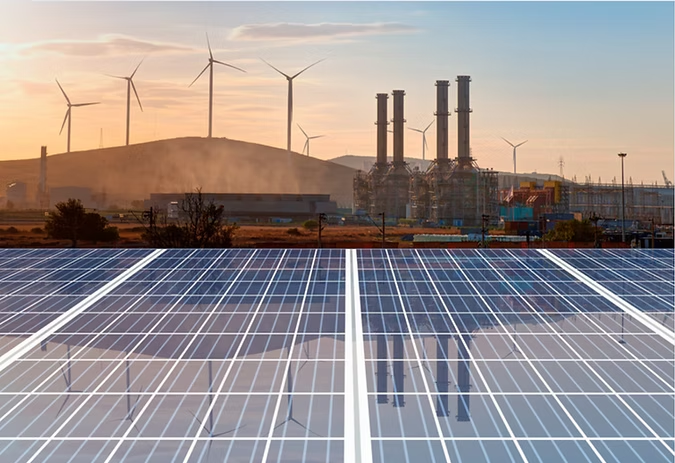
With the anticipated growth in energy demand, the creation of a “smart grid” can improve distribution, incorporate more renewable projects, and handle the expected increase from EVs, data centers, and AI. Rather than pressuring utilities into a costly, time-intensive, and hardware-based improvement for every line in the country, new technologies that provide similar benefits can reduce cost and prevent delays. These technologies encompass both hardware and software innovations, with applications that range from enhanced efficiency to mitigating the effects of disasters. By adopting new technologies now, utilities can build a transmission grid well-positioned for an efficient and resilient renewable-based economy.
Updating the power grid in the United States is a necessity, but has thus far proven to be an expensive and slow process. This is partly due to the current state of the infrastructure. Kaitlyn Albertoli, Co-founder and CEO of Buzz Solutions, explained that utilities cannot simply “build their way out” of their current situation. Albertoli outlined how providing utilities with accurate information regarding asset location is critical to improving resiliency and efficiency, enabling improvements to be made where they are most needed. Similarly, using AI technologies to analyze thousands of images and structures can play a role in preventing grid strain and allow for more efficient and targeted upgrades.
Support authors and subscribe to content
This is premium stuff. Subscribe to read the entire article.