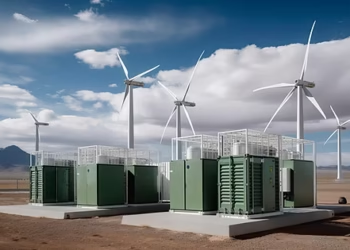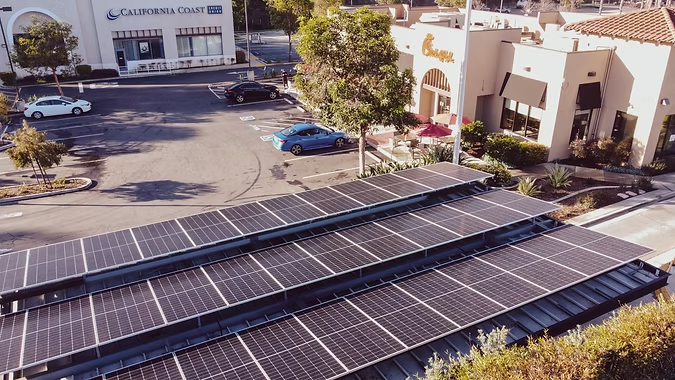
The combination of new technologies and new financing methods has set the stage for microgrids to play a significant role in decarbonization. Companies that are providing energy as a service, and therefore moving the upfront cost for microgrids away from consumers, have shown considerable popularity. The falling costs of both battery storage and solar technology have made microgrids a more attractive option, while reports from the DoE emphasize the role they can play in grid stability and resiliency. It is no surprise that, as demand continues to grow and the US shifts to more renewables, microgrids will play an increasingly important role.
A series of reports commissioned by the Department of Energy to create a microgrid program strategy found that the need for microgrids will increase as distributed energy resources (DER) increase. This is due to the ability of microgrids to act as a resilient and affordable tool in the push for decarbonization. In order to increase adoption, goals have been set to reduce microgrid cost, construction and commissioning time, and expand the amount of carbon-free sources in DER development. Microgrids are anticipated to grow in importance as DER continues to become a bigger share of energy generation. Should DER reach 30-50% of total generation capacity, microgrids will serve as a point of aggregation for these points of generation.
Support authors and subscribe to content
This is premium stuff. Subscribe to read the entire article.