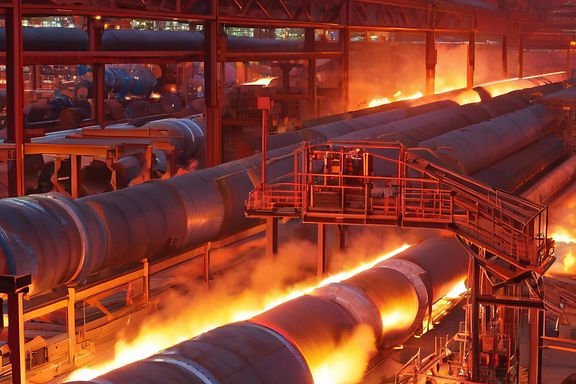
In a bid to move the US off foreign products and ” take other countries’ jobs”, the Trump administration has imposed a 25% tariff on all steel and aluminum imports. This isn’t new. Similar policies were seen in 2018 under his first administration, but its breadth today is much broader and is set to affect $1.4 trillion worth of goods as opposed to $380 billion in 2018 and 2019. It’s also more targeted, as seen by last week’s announcement of a 25% tariff on foreign-made cars and car parts—an industry that is the second-largest consumer of domestic steel.
Among the immediate consequences are stock market fluctuations and broader economic uncertainty. Yet a critical, though less discussed, question remains: how will these tariffs affect clean steel decarbonization efforts? While some, like the CEO of Cleveland Cliffs, one of the largest steel producers in the US, have praised the recent policy changes, experts have cautioned against the uncertainty this would introduce for climate progress.
Support authors and subscribe to content
This is premium stuff. Subscribe to read the entire article.